
How Microbes Affect Longevity
Amazingly, tiny gut microbes play an outsized role in how fast we age.

“Science and technology are the keys to both our longevity and our demise. Our entire existence on this planet is a double-edged sword.” —Rhys Darby
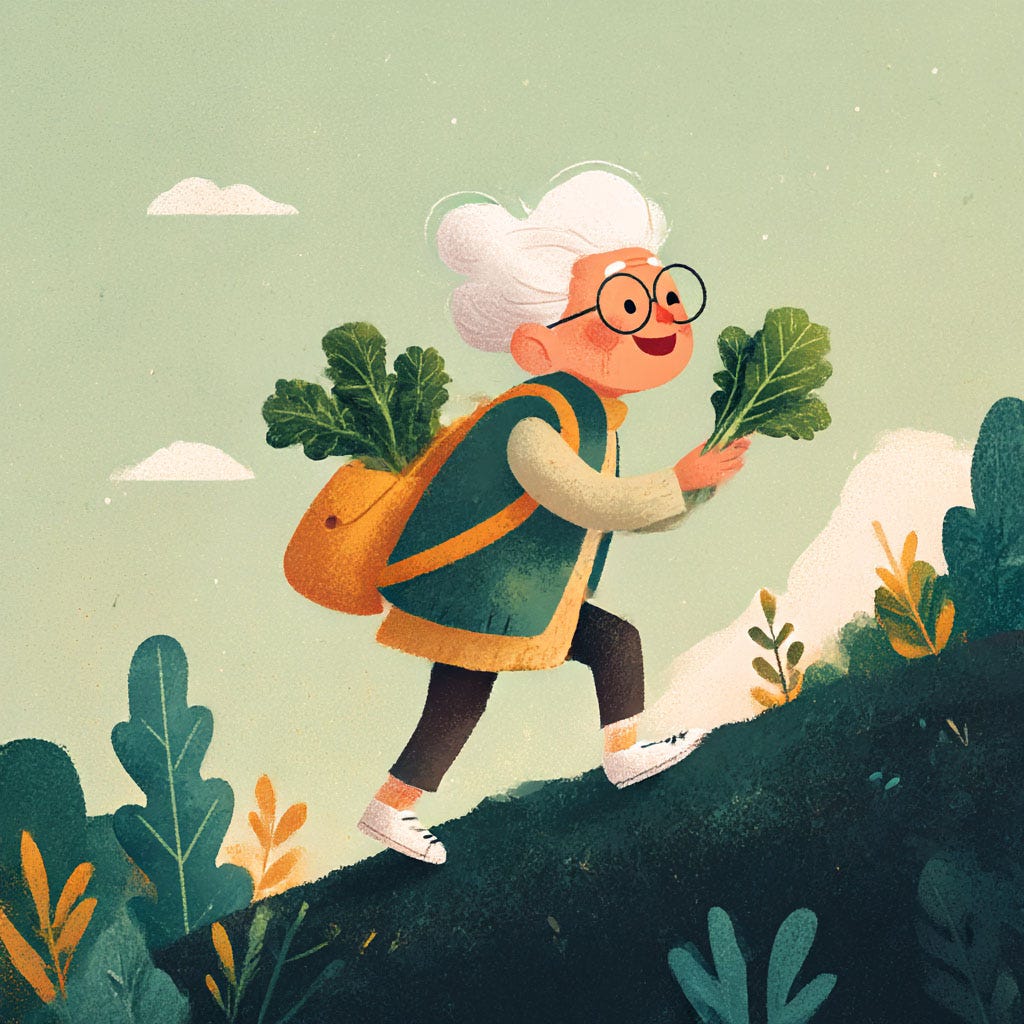
Longevity conjures images of smiling centenarians on some idyllic Greek island gathering kale and walking uphill. Always uphill.
That may not be so crazy. Recent research is revealing that the secret to a long life may be hidden in the microbial metropolis living inside us. And that has an intriguing relationship to kale and walking.
This thriving community, primarily consisting of the oral and gut microbiome, is a significant factor in our rate of aging. Our mouth and our gut, from stem to stern, work together to feed and house our microbiome. In return, that microbiome fights off the pathogens that continually attack us via air, water, and food. Without our homegrown microbes, we would be compost in just a day or two.
Even a bad microbiome keeps us alive, but just barely. It leaves us feeling sick and depressed. A good microbiome helps us live longer, and perhaps more importantly, helps us live healthier and happier. Here’s how it works.
Twin reservoirs
The human body is home to trillions of microbes, but the colon and the mouth house the largest and second-largest populations, respectively. The gut microbiome is a metabolic powerhouse; it breaks down complex fibers into short-chain fatty acids that heal the gut, reduce inflammation, and protect brain health.
The oral microbiome is the gateway to the gut. It contains hundreds of microbial species that revel in the warm, moist environments of our gums and tongue. The gut, or more specifically the colon, houses a pound or so of multiplying microbes consisting of thousands of species. It’s a jungle down there.
The devil of aging: dysbiosis
Longevity isn’t just about the presence of beneficial bacteria; it’s also about maintaining homeostasis — a state of balance. When this balance is disturbed, it’s called dysbiosis. In the mouth, dysbiosis often manifests as gum disease. This isn’t just a dental issue. Diseased gums may let microbes sneak into the bloodstream, where they are then efficiently distributed to every organ in the body.
Microbes may be dandy in the gut, but they can damage our other organs. Usually, our immune system springs into action to wipe out the marauders, but if the infection persists it can lead to chronic systemic inflammation — a potent driver of aging and the root of most diseases.
One pathogen in particular, Porphyromonas gingivalis, can make it to the brain where it secretes a toxin called gingipain, alerting the immune system. Sometimes it’s hard to know what’s worse: the toxin or the body’s brutal reaction to it. The immune system is not known for subtlety, incurring a lot of collateral damage. In the liver, that’s not too awful: the tissues can regenerate.
But in the brain, inflammation can kill memories, dull our thinking, and start a slide into dementia. In a postmortem examination, gingipain was identified in 96% of the brains of Alzheimer’s patients, almost triple the average rate.
That’s not the end of the gingivalis story. I apologize in advance for this factoid, but every day, we swallow over a liter of saliva, transporting billions of oral microbes like gingivalis right down the digestive tract.
Stomach acids kill many of them, but a surprisingly large number of microbes survive their odyssey to the hinterlands of the colon. Once there, microbes like gingivalis plow through the mucus coating and send out tiny grappling hooks to attach themselves to cells in the gut lining. They can invade the cell and secrete toxins that loosen the glue binding the cells together.
Thus damaged, the gut gets “leaky”. This allows bacterial fragments and toxins to leak into the bloodstream, triggering inflammation, just as it did in the mouth.
This systemic inflammation is a primary driver of age-related diseases like atherosclerosis, arthritis, Alzheimer’s, and diabetes. Welcome to “inflammaging” — a state of chronic, low-grade inflammation that accelerates the aging process.
I’m picking on gingivalis because it is a notorious offender, but other rogue microbes play various bit roles in inflammation as well. The mechanisms are similar.
The centenarian secret
If dysbiosis accelerates the aging clock, what can slow it down? Research on centenarians has provided some fascinating clues. Unlike less healthy elderly individuals, centenarians often maintain high microbial diversity. Their guts are rich in specific beneficial bacteria like Bifidobacterium and Akkermansia.
These beneficial microbes perform critical tasks for longevity. As mentioned, they fight off potentially deadly pathogens. But they also produce short-chain fatty acids like butyrate that heal the gut lining and soothe the immune system, keeping it in a maintenance mode rather than a dangerous inflammatory mode.
Interestingly, people who reach their hundredth birthday in good health often have oral and gut microbiomes that look remarkably similar to those of younger adults. And studies show that a fecal transplant (don’t think about it for too long) from a baby rat to an old rat makes it act younger. That gives a whole new vibe to the fountain of youth.
Cultivating a healthy ecosystem
The most empowering discovery of this research is that we have some control over our microbiome. Unlike our DNA, which we’re stuck with (thanks mom and dad), our microbiome can be reshaped through lifestyle choices. To support a healthy microbiome and promote longevity, here are four winning strategies:
Dietary Diversity: Aiming for 30 or more different veggies (like kale) per week provides the diverse fibers needed to support a variety of beneficial gut microbes. Sadly, most of us can’t even name or identify more than seven vegetables. And, except for potato chips and fries, we don’t really like them. But if we want to increase our health-span, we need to grow up and get used to them, just as our mothers told us.
Oral Hygiene: Brushing and flossing aren’t just for a winning smile; they also prevent oral pathogens from building bacterial battalions eager to assault our colon.
Fermented Foods: Foods like sauerkraut, kimchi, kefir, and yogurt introduce probiotics that can discourage the inflammatory species that drive aging. You want live cultures; don’t get the pasteurized versions if you want the full effect.
Exercise. It isn’t completely clear how it works, but exercise balances our gut microbes. So get off the sofa and go for a walk. Uphill, of course. As a bonus, exercise keeps us fit enough to chase the kids off our yard.
As the research pours in, it is becoming clear that we are not a solo act, but a walking ecosystem. Whitman was right when he said he contained multitudes. That microbiome is linked to how fast we age. Nurture your beneficial microbes today and you’ll have them around for a lot longer. You know what to do.
References
Badal, Varsha D., Eleonora D. Vaccariello, Emily R. Murray, et al. “The Gut Microbiome, Aging, and Longevity: A Systematic Review.” Nutrients 12, no. 12 (2020): 3759.
Dominy, Stephen S., Casey Lynch, Florian Ermini, et al. “Porphyromonas Gingivalis in Alzheimer’s Disease Brains: Evidence for Disease Causation and Treatment with Small-Molecule Inhibitors.” Science Advances 5, no. 1 (2019): eaau3333.
Fascinating as always, Scott. I envy your ability to present science in such an engaging and entertaining way, yet at the same time so comprehensive, accurate, and up-to-date. The microbiome is the discovery of the century; it’s everywhere and plays a role in everything. We are carriers of a veritable zoo, and we hadn’t even noticed it. There is a Spanish philosopher, Ortega y Gasset, who said, "Yo soy yo y mis circunstancias" (“I am myself and my circumstances”). If he were alive today, he would say, “I am myself and my microbiota.”😉
Informative, interesting read,